

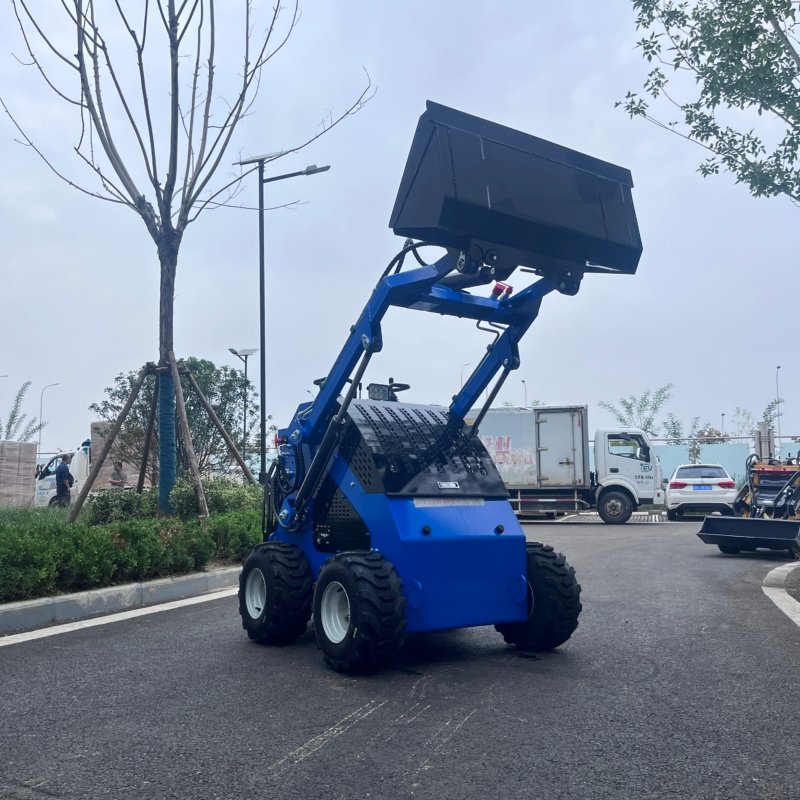
Skid Steer Loader: The Versatile Compact Machinery for Diverse Applications
A chargeuse compacte is a compact, maneuverable machine designed for various tasks in construction, agriculture, landscaping, and industrial environments. Named for its unique “skid-steer” steering system—where the wheels on each side can move at different speeds to pivot or “skid” around turns—this versatile equipment has become a staple for projects requiring precision, efficiency, and adaptability.
Key Design Features
- Compact Size & Maneuverability
Les chargeuses compactes se caractérisent par un faible rayon de braquage, souvent sans braquage, ce qui permet de les utiliser dans des espaces confinés tels que les chantiers urbains, les serres ou les allées étroites. Leur châssis compact minimise le compactage du sol, ce qui les rend idéales pour les surfaces délicates comme le gazon ou les plates-bandes de jardin.
- Quick-Attach System
The hallmark of skid steers is their ability to switch attachments rapidly. Standard attachments include:
- Buckets: For digging, loading gravel, or moving debris.
- Pallet Forks: For lifting and transporting pallets, logs, or building materials.
- Augers: For drilling holes in soil or ice.
- Brush Cutters & Snow Blowers: For landscaping and winter maintenance.
- Wheel Saws & Breakers: For construction tasks like cutting concrete or demolishing pavement.
This modular design eliminates the need for multiple specialized machines, reducing costs and enhancing productivity.
- Power & Performance
Powered by diesel or gasoline engines (ranging from 20 to 100+ horsepower), skid steers offer high torque for heavy-duty tasks. Hydraulic systems provide consistent power to attachments, ensuring smooth operation even in tough conditions.
Diverse Applications
1. Construction & Demolition
- Excavating trenches for pipelines or foundations.
- Loading and transporting building materials like sand, bricks, or steel beams.
- Breaking up old pavement with a hydraulic breaker attachment.
2. Agriculture & Farming
- Feeding livestock by handling hay bales with pallet forks.
- Clearing barns or yards with heavy-duty buckets.
- Planting trees using auger attachments in orchards or nurseries.
3. Landscaping & Grounds Maintenance
- Grading soil for lawns or garden beds with a box blade.
- Removing snow from driveways or parking lots with snowplows or blowers.
- Mulching brush and debris with specialized cutting attachments.
4. Industrial & Warehouse Operations
- Moving pallets and containers in logistics centers.
- Cleaning up industrial waste with magnetic sweepers or grapple buckets.
Advantages Over Traditional Equipment
- Cost-Effectiveness: One machine with multiple attachments replaces the need for separate loaders, excavators, and trimmers.
- Operator Comfort: Cab-enclosed models offer climate control, noise reduction, and 360° visibility, improving safety and reducing fatigue.
- Environmental Friendliness: Modern skid steers meet strict emission standards, with electric-powered models emerging for zero-emission operations in sensitive environments.
Technical Specifications (Example)
| Parameter | Standard Model | Heavy-Duty Model |
| Engine Type | Diesel | Turbo-Diesel |
| Horsepower | 40-60 HP | 70-100 HP |
| Operating Capacity | 1,500-3,000 lbs | 3,500-5,000 lbs |
| Bucket Capacity | 0.5-1.5 yd³ | 2.0-3.0 yd³ |
| Fuel Tank Capacity | 15-30 gal | 40-60 gal |
| Dimensions (L×W×H) | 10×5×6 ft | 12×6×7 ft |
Conclusion
The skid steer loader stands as a testament to engineering ingenuity, combining power, precision, and adaptability in a compact package. Whether navigating tight urban job sites, maintaining rural farms, or supporting industrial logistics, its ability to transform into specialized tools through quick attachments makes it an indispensable asset for modern workplaces. As technology advances, electric and autonomous variants are set to expand its applications further, solidifying its role as a cornerstone of efficient machinery.